One of the things I love most about making picture books is that what you make is limited only by your own imagination.
Kids learn best from play - guided gently through the how-tos and what something should look like. This is why I LOVE this as a fun activity for wee ones. They are the masters of their own creative universe!
I stumbled upon this 'how to' video from Simple and Easy Projects whilst doom-scrolling one night, and immediately got back up and tried it out. These mini-books are so simple to make, and can double up as homemade story cards for birthdays, too!
"She danced the Choo Choo Train song the end'
So then I tried it out on my granddaughter ('Goose'). She LOVED the fact that she had made her own story - completely from her own head. I asked her what the next part of the story was, wrote it down in the book for her, and she made the drawings. What was even better, was that she remembered the WHOLE story and read it out, several times, pointing at her pictures and telling us what each thing was.
Yes, it was like something out of a fever dream: "The princess was in the woods. She saw a frog and ran away. She went to a party. She danced to the 'Choo Choo Train' the end.' But it was all from her own imagination. From her excitement, I think, too, that she was chuffed that she was the author of the story, going to her mum and dad and saying 'I made a book! The Princess by Aurora!"
So why not give this a try, and see what tall stories your wee cherubs come up with?
If you live on Bute, you'll know how special the tiny village of Kilchattan Bay is. (If you don't, come and visit!)
The walk around the coast, past the lighthouse, St. Blanes Church, and back down through the forest, is my favourite.
But long before finding this walk, I would visit Bute with my girls and head to the rock pools. Even now, the thought of finding little sea treasures - shore crabs, sea potatoes (ok, sea urchins) and bits of sea glass, is exciting.
So I wanted to pass that feeling onto my grandchildren when they come to stay.
That's how the Bubble Buckie came to be. Well, not right away; he was a 'Bogle Buckie' for a while, and then he was a 'Wish Winkle' until he finally settled on his name.
This magical sea snail is washed ashore by the tide - just for a while - which means that any time we're at the rock pools, there's always a chance he might just have come back for a wee visit!
I hope that families who have read the book will venture out to Kilchattan to look for him!
I was really excited when my grandchild (AKA "Goose") asked for The Bubble Buckie as a bedtime story.
I had a wee moment of pride as we settled down and I started reading. But about one sentence in, she grabbed the book, flipped through almost the entire story before stopping dead at her favourite page - of her little sister covered in chocolate cake. She giggled, then slammed the book shut and wandered back to the bookshelf for another story.
Tough crowd ...but to be fair, she's only two-and-a-half. Still, it made me want to make every page a 'Cake!' page. I'm loving the learning on this new journey, so here are some things I've picked up so far, to add to your own nuggets of wisdom.
1. Little ones can have the attention span of a fish supper.
Ok - so this is clearly not a wisdom nugget. But I've been keeping this in mind throughout my storytelling journey. Beyond special time with their favourite person, I think tiny humans really only care about two things: how much effort you put into making silly sounds and voices, and what catches their eye on the page. We have the fun of making a story sparkle for them and keeping them hooked until the last page.
2. Cut, cut, cut!
There are pretty strict guidelines on word count from publishers, so all those clever little nuances or additional descriptors that made you chuckle might be a faint memory by the final draft. Generally, they demand under 500 words for a picture book, and up to around 750 words for Early Readers. There's some really good information on the Penguin Books Website if you're looking to try your luck with the publishing route.
Of course, if you're self-publishing, it's entirely up to you, but I think that following these guidelines helps to ensure that your book still meets readers' expectations and standard publishing requirements, like page numbers, formatting and the like.
Every story in the Bute Tall Tales series began as a spark of an idea that grew arms and legs ...which were then heartlessly chopped off to reduce the word count. This was actually a really good exercise in making the storyline punchier and the words more carefully chosen.
Always room for a SPLAT! or a SPLOOSH!
A well-placed 'WHOOSH' in an exciting font captures the imagination much more than 'The tiger whooshed past the monkey'. It also gives the reader and the child something to talk about (as well as reducing a precious word count).
3. Words and pictures simpatico: It matters a LOT-ico ...
With over 200 000 books published in the UK each year, it's easy to find illustrations that don't quite match the story. This is particularly true now with the advent of AI-generated imagery. Little ones want to follow the story visually, so gather as much feedback as you can to ensure that the illustrations match the storyline and reading age. Each person I asked gave truly valuable insights that I would never have picked up on myself!
4. Add a sparkle, but don't dazzle!
After realising that a chocolatey face was the only crowd-pleaser for my grandchild, I began zhuzhing up my illustrations. But there's a fine line between adding some sparkly bits to enhance your image and creating a laser show that only distracts. I dialled down the additional elements in my final drafts—and it was definitely needed.
5. The sciencey bit: how child development impacts storytelling
It's funny how stuff you learn can crop up and be useful in a completely different context! Whilst it's obvious that a child's age dramatically impacts how they process a story, I thought the 'why' behind some of these might be interesting to include:
Very young children struggle with seeing things from another's perspective. Ask them what someone on the other side of the room sees, and they will likely tell you what they see instead. Piaget's Theory of Cognitive Development provides some insights on why some things might go over their heads.
Small? Or just very far away? Children below 7-ish, still according to Piaget, can't easily track transformations. Regardless of whether you're drawing a monster, a mouse, or a worm, keep the scale consistent throughout the story to prevent confusion.
Also, exaggerating size differences where you can (e.g., between a teeny-tiny mouse and a humongous elephant) creates a captivating contrast. Kids find 'different' exciting as they are still forming their understanding of the world by shape, size, colour, sound, smell and touch.
Inference is a problem for tiny humans. Younger children can find it hard to infer meaning from partially hidden objects or incomplete images. They might try to work out the picture, get frustrated, and then lose interest. I am terrible at drawing hands, feet, and most angles of either, so I often ended up hiding the offending limbs behind random bushes or rocks until I learned the basics. If you also hide wonky hands in pockets, I'd recommend watching YouTube videos or taking some courses on 21-Draw.
Abstract concepts are also pretty much an enigma. Metaphors, turns of phrase, or visual symbols are best avoided for very young readers. This is because their perception of the world isn't yet sophisticated enough to pick up nuance or abstract ideas.
I hope this has been useful for those on their own children's storytelling journey. Please do like/follow me on Facebook or Instagram - or sign up to my mailing list for more booky blogs! Thank you:)
Lorem Ipsum has been the industry's standard dummy text ever since the 1500s.
Have you ever stood at an ancient site, closed your eyes, and tried to imagine the life of someone from that time?
Whilst we live in a data-driven world where there is often little time for flights of fancy, there is still, somewhere underneath it all, a deep curiosity - and for some, a deeper yearning to connect - to our long-distant past.
Stepping Off the Day-Trip Trail
This connection feels more within reach here on Bute than any other place I’ve been. But it’s not just the castles and towers, neo-Gothic mansions, and church ruins that fascinate me. It’s Bute's hidden history that lies in the undergrowth, rarely visited because it isn't on the usual maps, walking route apps, or day-trip brochures.
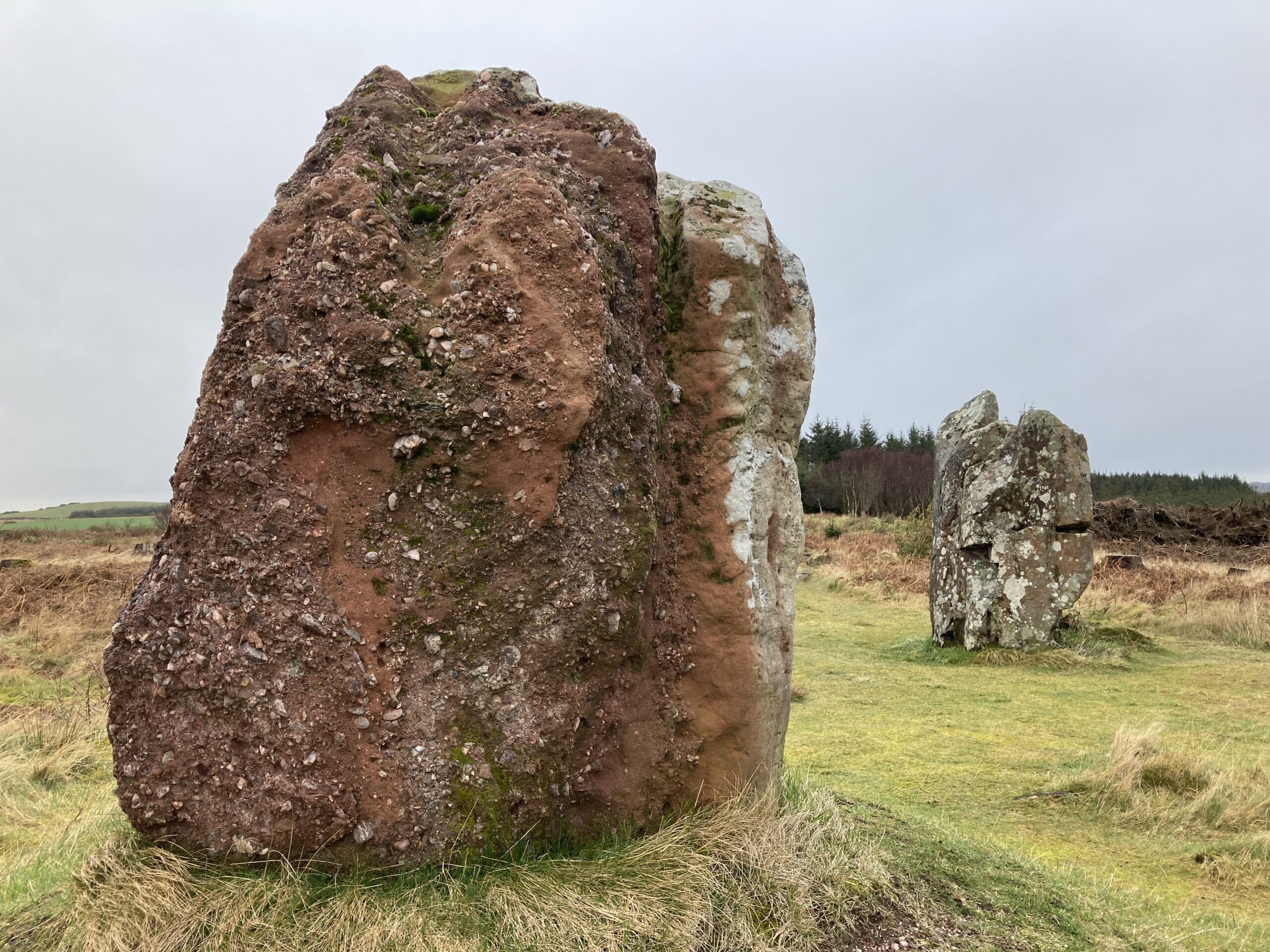
When you find these mossy mounds that hold secrets deep beneath the earth, or massive hewn stones that were clearly once a part of something meaningful to a race long gone - be they prehistoric settlers, Brythonic Celts, Scots or Vikings - it captivates the imagination.
...and perhaps - if only for a moment - the veil between now and 7000 years ago thins. We need only to stand still and open our minds to feel the past come to meet us.
Of course, it’s likely little more than an overactive imagination meeting itself - but I don’t think it matters! Knowing that someone stood in that very spot, possibly also pondering the human condition we are, is somehow comforting. Regardless of how much time has passed, we are still the same lonely beings, seeking meaning beyond our ken.
Passing Down the Magic
That is the real magic of this island. It doesn't shout at you from a brochure; it waits quietly for you to find it.
And whilst my books are simple little stories, it's adults who read to the little ones. I hope that in some small way, they might encourage others to explore, imagine, and wonder at the ancient world right beneath our feet on Bute.
Why not do a little digging yourself (metaphorically!) Trove.scot has an incredible library of maps, images and texts all about Bute! And if you want to see the real artifacts uncovered from these mossy mounds, be sure to visit Bute Museum, right beside Rothesay Castle!